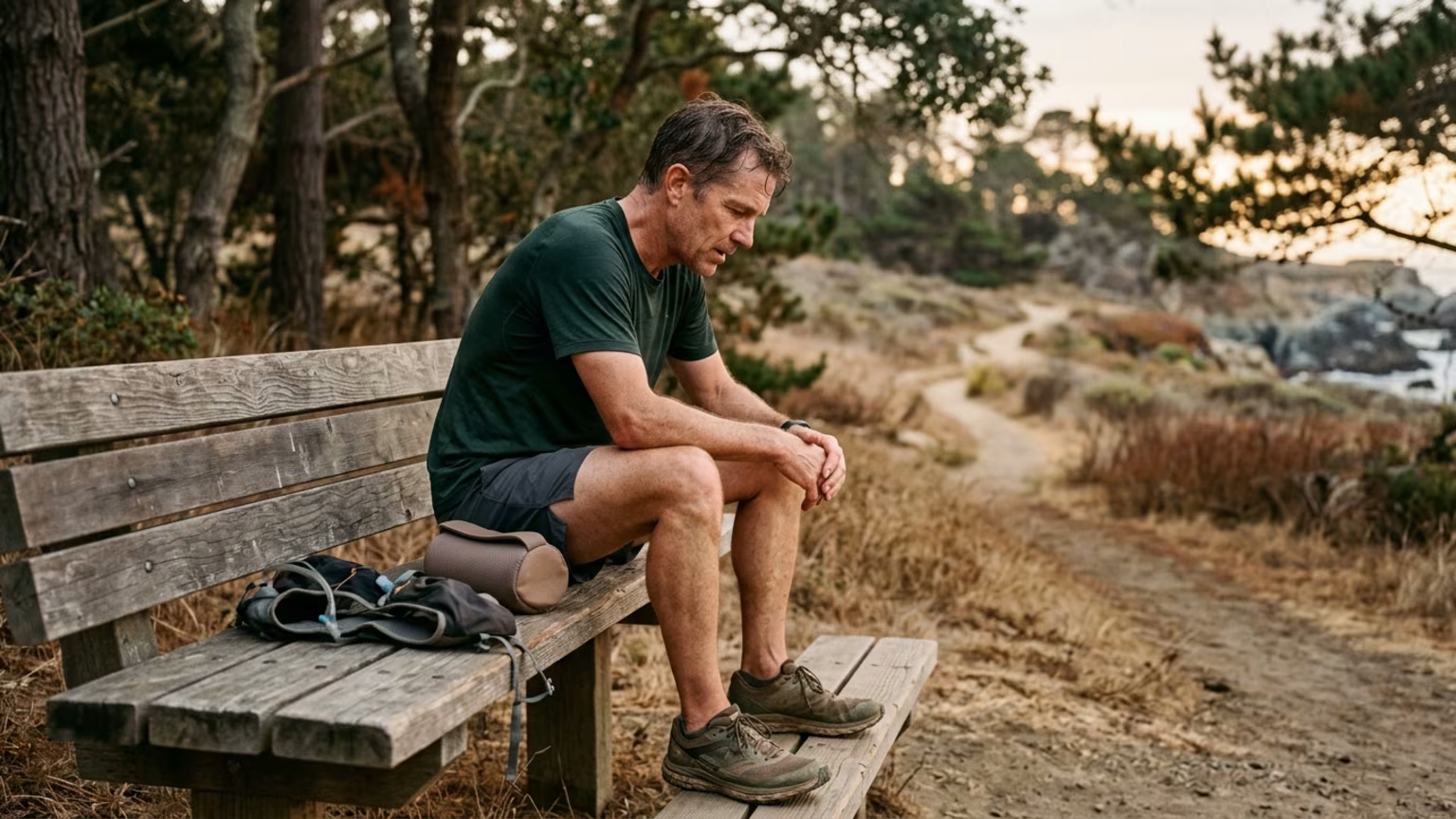

A new Flinders University review warns that obstructive sleep apnea may quietly ruin athletic recovery. Learn why fitness doesn't guarantee healthy sleep.





High cardiovascular fitness guarantees healthy sleep architecture. The reality is that a fast race time offers zero absolute protection against obstructive sleep apnea. We often assume metabolic health equals structural airway health. That assumption leaves many veteran athletes chronically exhausted.
Endurance athletes regularly treat unexplained fatigue as a simple training programming error. We buy new mattresses, adjust our room temperature, or try different nutritional approaches. We rarely consider that our airway might be physically collapsing while we sleep. A new sports science paper suggests this oversight might be quietly undermining our athletic recovery.
Many runners and cyclists assume their lean physique serves as an impenetrable shield against respiratory issues. If our training volumes remain high, we rationalize morning headaches as mild dehydration. We ignore daytime sleepiness by blaming the previous weekend of long trail miles. This persistent denial prevents us from addressing a genuine medical condition.
When we experience a drop in performance, we quickly blame our age or our workout intensity. We obsess over heart rate variability and resting heart rate data on our smartwatches. However, athletes who invest heavily in understanding proper sleep protocols know that structure matters more than gadgets. If you cannot breathe at night, your training metrics will inevitably crash.
Medical culture historically painted a very specific picture of sleep apnea. The classic patient was older, sedentary, and carrying significant excess weight. If you were lean and running high mileage, doctors rarely asked about your sleep quality. This outdated clinical profile created a massive blind spot in modern sports medicine.
We now know that an athlete with a normal or relatively low BMI can still suffer from airway issues. Flinders University researchers published a four-page perspective in the August 2026 issue of Sports Medicine titled “Obstructive Sleep Apnea: A Potential Sleeping Giant of Sport Performance and Health?” They argue that obstructive sleep apnea may be an under-recognized problem in sport. It can remain completely invisible to routine sports screening and monitoring.
Much of the current athlete-specific evidence focuses on contact and collision sports rather than endurance events. One cited review estimated OSA prevalence at about 30% in the studied contact-sport populations. While that specific number cannot be directly transferred to endurance sports, it proves that high athletic status does not prevent sleep-disordered breathing. The Flinders paper highlights that certain athlete groups may be at risk regardless of their fitness levels.
The authors frame this condition as a potential health threat that extends far beyond a bad night of rest. Cardiovascular health is an important reason not to dismiss persistent sleep-disordered breathing as merely a recovery problem. The Flinders paper characterizes OSA as potentially health-threatening, and broader clinical reviews link it directly with cardiovascular risk. Ignoring these symptoms out of stubbornness is a dangerous game for any aging athlete.
Athletes over 35 must recognize that the natural aging process alters our physical structures. The paper says prevalence is higher among men and increases with age and adiposity. We cannot rely on the protective benefits of youth to maintain airway patency forever. As our tissues change, our susceptibility to structural sleep disturbances naturally shifts.
Obstructive sleep apnea involves repeated narrowing or collapse of the upper airway during sleep. This structural failure causes pauses in breathing, oxygen desaturation, and heavily fragmented sleep cycles. Clinically, OSA is generally diagnosed when the apnea-hypopnea index reaches at least 5 respiratory events per hour alongside compatible symptoms. This condition literally chokes off the oxygen supply required for cellular repair.
The authors summarize estimated OSA prevalence in the general adult population as roughly 10% to 30%. The severity varies significantly, with moderate-to-severe disease affecting approximately 6% to 17% of adults. In cohorts with a body-mass index of at least 30 kg/m², approximately 40% to 70% meet criteria for at least mild OSA. While these are general population numbers, they illustrate how common this breathing disorder truly is.
Rethinking conventional wisdom is a required skill for athletes who want to stay active for decades. When my Achilles flared up right before a major marathon build, the standard advice was total rest. But reading the clinical research on tendon loading changed my approach entirely. I swapped complete rest for heavy slow resistance training, specifically utilizing heavy calf raises on a deficit.
It felt counterintuitive to load an injured tendon, but the science was clear. Within six weeks, the morning stiffness faded, and I was back to building mileage without the chronic ache. That same willingness to question standard medical assumptions must apply to our sleep habits. We often chase complex recovery tools when our basic physiology is actually compromised.
A 2026 review of recovery modalities in competitive and elite endurance athletes highlights the importance of basic rest. The researchers found no physical recovery modality that outperformed passive recovery across eight outcomes and 47 comparisons. Passive recovery relies entirely on deep, uninterrupted rest to repair tissue and restore hormones. When sleep is structurally broken, no expensive tool or massage gun can fix the resulting fatigue.
The symptoms of airway collapse often mimic the signs of extreme training fatigue. Persistent non-restorative sleep, loud snoring, gasping, and daytime sleepiness are all primary red flags. Many athletes mistakenly assume these symptoms are just the cost of doing business in endurance sports. We must realize that how recovery changes after 35 involves monitoring health markers, not just muscle soreness.
A 2026 community study reported impaired sleep-homeostasis dynamics with increasing OSA severity. While this was not conducted specifically in athletes, it illustrates how breathing issues destroy restorative rest. The overnight dynamics of slow-wave activity are essential for physical repair and cognitive clarity. Without these deep sleep stages, an athlete will eventually hit a severe performance plateau.
The Flinders authors note that undiagnosed breathing issues can silently impair performance and ruin training adaptations. Screening questionnaires like STOP-Bang or the Epworth Sleepiness Scale can help identify risk. However, these simple tools cannot establish or exclude a true medical diagnosis on their own. Objective medical testing is an absolute requirement for understanding your actual sleep architecture.
Polysomnography remains the diagnostic reference standard because it simultaneously measures sleep stages, respiratory events, and oxygen levels. This comprehensive laboratory test provides a clear picture of how your body functions during rest. Home testing can be useful for some patients, but it has distinct limitations. Home tests may underestimate severity because actual sleep time might not be measured directly.
For appropriate patients, a negative home sleep test should not necessarily end the evaluation. If clinical suspicion remains high, the medical literature recommends discussing laboratory polysomnography with a treating clinician. Athletes are notorious for wanting a quick fix, but diagnosing sleep disorders requires patience and precision. We must rely on clinical expertise rather than guessing our way through chronic exhaustion.
Proper diagnosis opens the door to targeted, effective medical treatments. Positive-airway-pressure treatment is considered first-line therapy for most adults with moderate-to-severe OSA. Clinical reviews report average improvements in respiratory events, nocturnal oxygenation, daytime sleepiness, and overall quality of life. For an endurance athlete, these medical improvements translate directly into better injury prevention and recovery.
Ambitious athletes must stop viewing persistent, non-restorative sleep as a normal phase of heavy training. If you experience witnessed breathing pauses, loud snoring, or chronic daytime sleepiness, you need professional medical assessment. Treating obstructive sleep apnea is a fundamental health intervention, not a simple performance optimization strategy. Acknowledging a medical barrier is the first required step toward actual physical progression.
Athletes should bring concrete information to their medical appointments to facilitate a proper evaluation. Document your typical sleep duration, morning symptoms, daytime sleepiness, and any changes in your training performance. This specific data helps your doctor understand the severity of your daily fatigue. Treating your health with the same rigor as your training schedule yields the best long-term results.
We train hard to preserve our vitality, but we cannot outwork every structural reality of the human body. Moving past outdated assumptions requires a quiet honesty about our physical limits and vulnerabilities. True longevity in sport demands a willingness to look closely at the invisible variables we would rather ignore. The most profound gains often come from accepting the quiet truths we face in the dark.

Follow ReEndure for practical insights on endurance training, recovery, nutrition and healthy aging. Stay connected for new articles, research led guidance and ideas to help you perform better for longer.




Read practical ideas on endurance training, recovery, nutrition and healthy aging to keep progressing for years to come.
Read the Blog